Project Jeep CJ-7 Daystar Swaybar Bushings Tip. When swapping out your stock CJ swaybar bushings with the Daystar Swaybar Bushings, here’s a Tip – Use the CJ bracket! Here’s why…
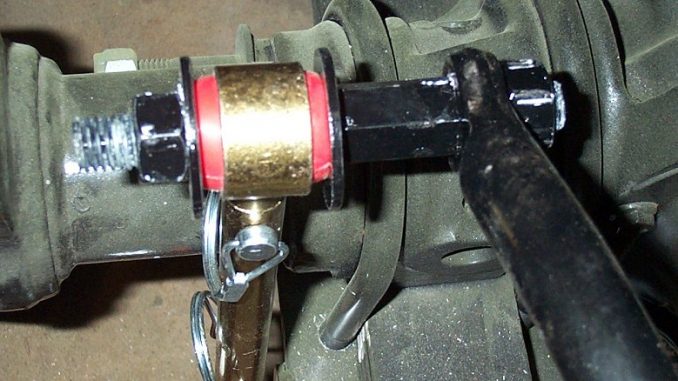
First off, upgrading your sway bar bushings from the old stock rubber bushings to newer polyurethane bushings is a good idea. Generally, the old rubber is worn out and soft, offering little effective anti-sway on the road. But if you own a CJ and you are about to or have already replaced the old bushings with the Daystar replacement, then you might want to read this tip.
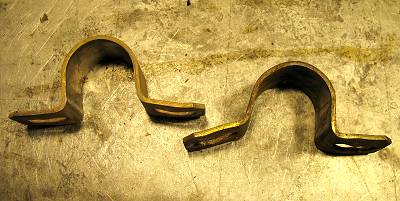
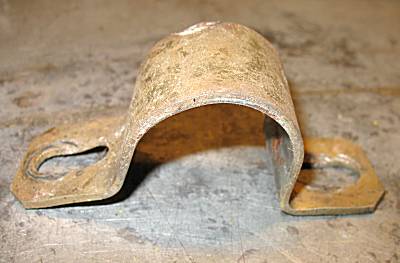
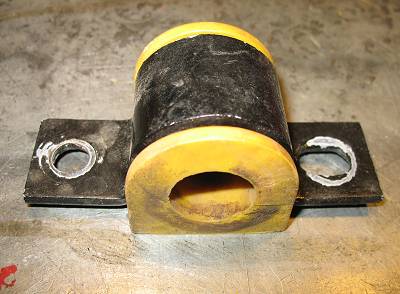
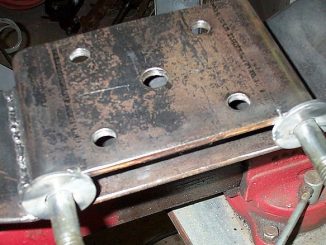
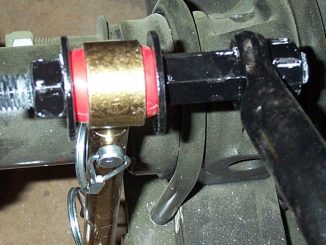
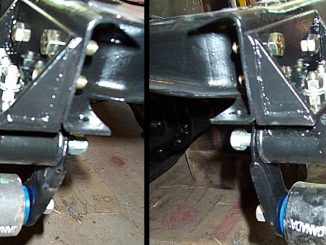
When the project CJ-7 was built, the factory swaybar bushings were replaced before the Jeep ever hit the trails. After a couple of years of offroading in my CJ-7 I was doing one of my post wheeling once over inspections to look for any issues that might have popped up during the last trip. Looking at the Daystar swaybar bushing, I saw to my surprise, that the bushing brackets had warped and bent. This past trip prior finding this, I had driven a little with the swaybar connected. Nothing radical, just some cruising on the rough roads near a lot of cabins, roads that average cars can navigate easily.
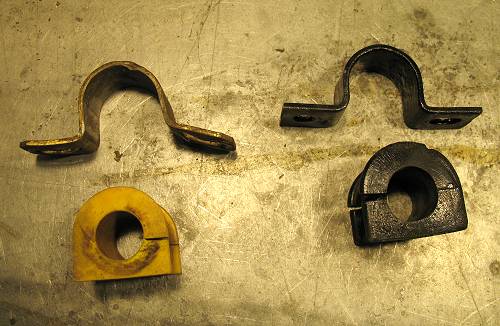
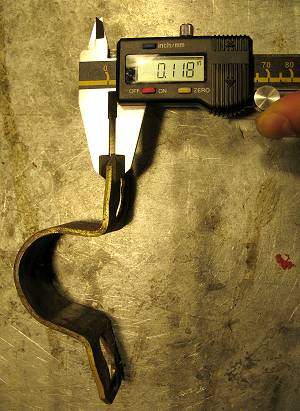
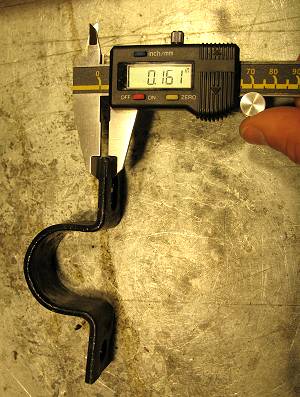
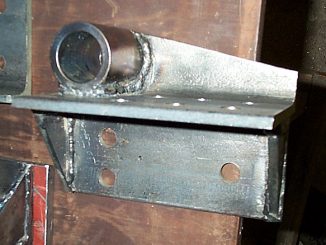
I figured I could take a hammer to them and flatten them out again, but chances are they would just bend again. I knew I had the original brackets still hanging in the garage (I never throw away anything, thus the clutter). Closer inspection of the factory CJ-7 brackets, I realized that the CJ’s brackets were thicker material. Putting a micrometer to each bracket, I got .11 inch on the Daystar bracket and .16 inch on the stock CJ-7 bracket. Additionally, the Daystar bracket had an oblong hole on both sides, where as the CJ had a smaller oblong hole on just one site and a single circle hole on the other. Obviously the Daystar is oblong to accommodate a variety of dimensions but the holes had apparently made the bracket just that much more weaker.
Daystar bracket – .118 inch
CJ bracket – .161 inch
So, to get to the point and the tip I used the CJ-7 swaybar bracket along with the Daystar polyurethane bushing. I’m much more confident that the CJ brackets can withstand a little pounding as where the daystar brackets just couldn’t take it. It’s a good thing I kept the old parts.
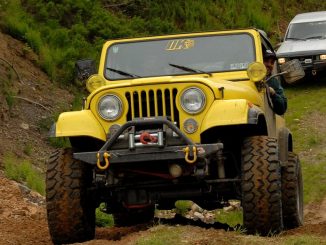
The budget Rebuild by Ralph HasselThe complete build is documentedhere on www.Offroaders.comThis 1978 Jeep CJ-7 never started life as a complete Jeep; rather it was built completely from parts. The goal was to build a […]
A Budgeted Jeep CJ-7 Rebuild from Concept to Conception by Ralph Hassel My evolution of thought… It all started with a humbling realization a number of years ago. My current vehicle, a 92 Toyota pickup 4×4, […]
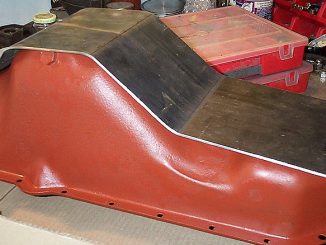
This relatively simply oil pan modification, though it’s being done on Project CJ-7, can be installed on almost ANY 4×4 with an exposed oil pan. Though it may be a rare event to poke a […]
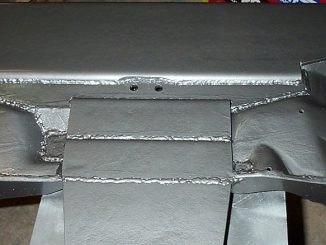
This Project CJ-7 article is about converting and armoring a Dana 300 skid plate to work with a Dana 20 transfer case. An ounce of prevention is worth a few pounds of steel. After hearing stories […]
In swapping the T-18A onto this Jeep project, a good tip was passed onto me from Mike of www.Jeepfan.com. This tip has to do with the stock clutch fork being used in the stock bell […]
Fabricating Custom U-Bolt Plates with Skid Protection for Project Jeep CJ-7 With the job of a Dana 44 axle swap to the project CJ-7 came the need for new u-bolt plates. Two things made stock u-bolt […]
A Simple yet very effective method of protecting your tie rod from impact with rocks and things, is to raise the tie rod up. Raising the Drag link also reduces bump-steer, a side effect of […]
Using 6 bucks worth of material to protect a 300 dollar 3-core radiator and to cool the V8 Engine. When looking at the grill of my 78 CJ-7, the one thing that just stuck out like […]
After doing some research I finally decided to look for a Borg-Warner T-18A manual transmission. Manual because that is what I prefer. The T-18A because of it’s 6.32:1 first gear and it’s heavy duty, cast […]
Project Jeep CJ-7 Daystar Swaybar Bushings Tip. When swapping out your stock CJ swaybar bushings with the Daystar Swaybar Bushings, here’s a Tip – Use the CJ bracket! Here’s why…First off, upgrading your sway bar bushings […]
Project Jeep CJ-7 – Disassembling the Scout II Dana 44 Front Axle. After acquiring the Dana 44 axles I also picked up a Dana 30 narrow track front axle that was in great shape. The […]
Continuing on from the front axle prep, the rear axle’s spring pad angle recorded and spring pads were removed. That was followed up by an inspection of differential and rear drum brakes to make sure […]
Project Jeep CJ-7 Scout II Dana 44 Axles Swap onto a CJ-7 FrameNew Custom Fabricated HangersFront Springs – Front HangersThe front hangers were a little easier to design than the rear hangers. Mainly because they […]
Project Jeep CJ-7 Scout II Dana 44 Axles Swap onto a CJ-7 FrameFabricated Leaf Spring HangersInstalling the Front Leaf Springs HangersBelow is the whole set of hangers. Gussets have been welded in and all the holes […]
Project Jeep CJ-7 U-Bolt Skid PlatesFabricating Custom U-Bolt Plates with Skid ProtectionWith the job of a Dana 44 axle swap to the project CJ-7, came the need for new u-bolt plates. Two things made stock […]