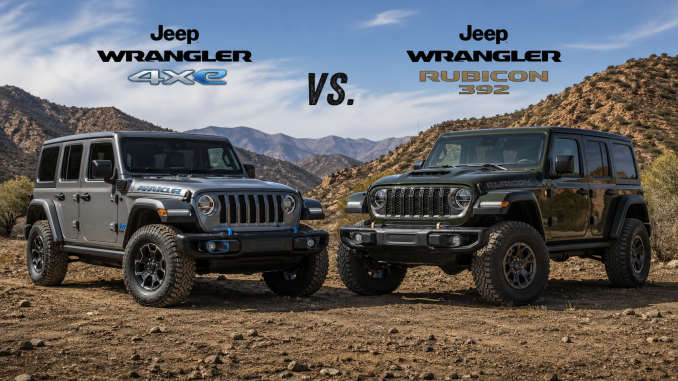
Jeep Wrangler 4xe vs. the Jeep Wrangler Rubicon 392
It’s early morning at the trailhead. One Jeep rolls in almost silent—the Jeep Wrangler 4xe, creeping up in electric mode like it’s stalking the trail. A few minutes later, the calm gets shattered by the deep rumble of a V8—the Rubicon 392 announcing itself before it even comes into view. Two Wranglers, two completely different personalities, both built to dominate off-road—but in very different ways.
If you’re trying to decide between the Jeep Wrangler 4xe and the Rubicon 392, you’re really choosing between two philosophies: hybrid efficiency and cutting-edge tech versus raw, unapologetic V8 power. This comparison breaks it all down—real-world off-road capability, daily driving, fuel economy, and what it actually feels like to own each one—so you can figure out which Jeep fits your kind of adventure.
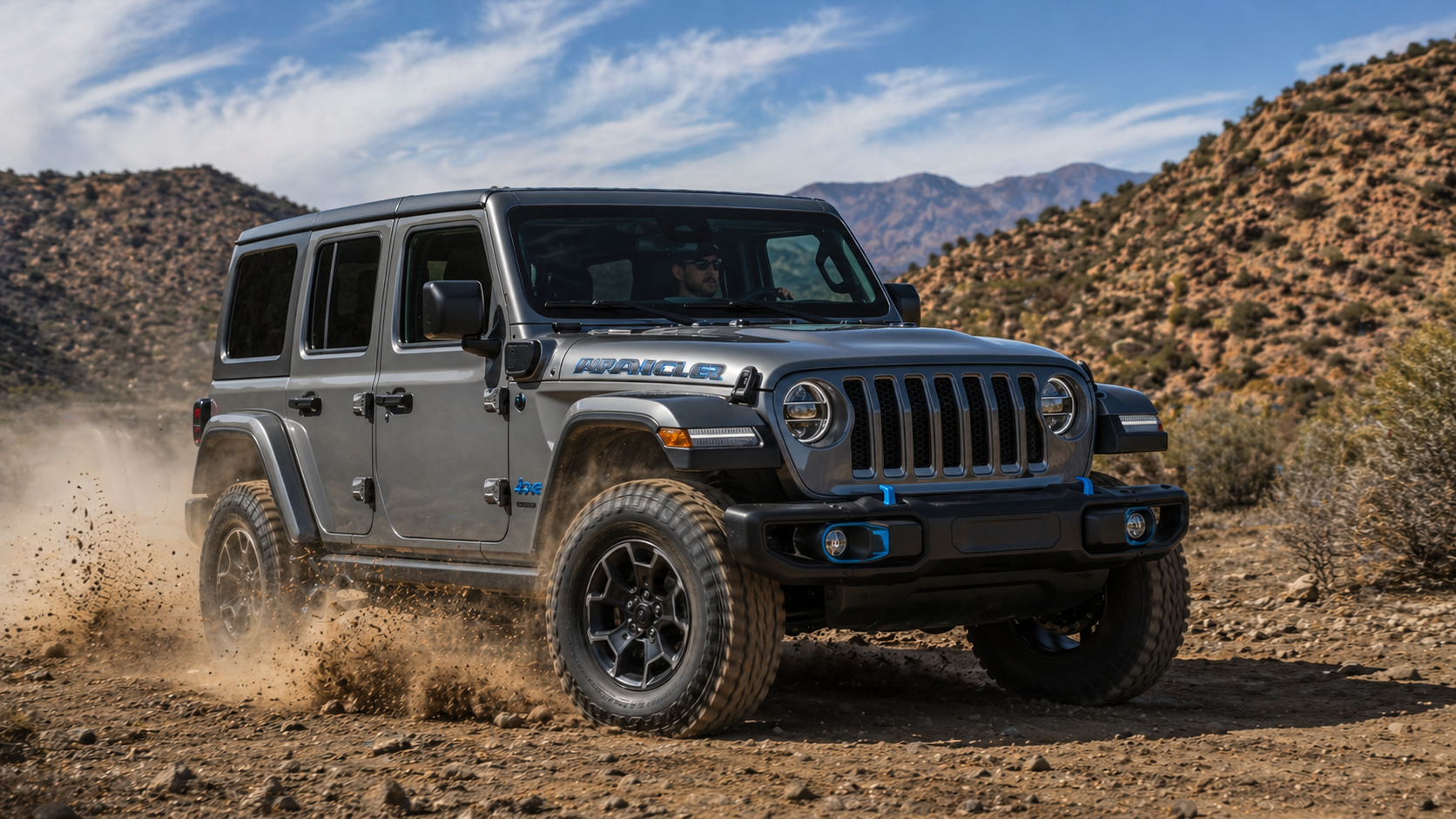
The 4xe shows up to the trail with a different kind of attitude. Hit the button and it’ll glide forward in near silence—no exhaust bark, no drama—just instant torque doing its thing. Under the hood, you’ve got a 2.0L turbo four paired with electric motors, cranking out a solid 375 horsepower and a stump-pulling 470 lb-ft of torque. Around town or on short runs, you can stay in electric mode for about 21 miles, which means fewer stops at the pump and a lot less guilt when you’re just running errands. And with an EPA-estimated 49 MPGe, it’s easily the most efficient Wrangler in the lineup. But this isn’t just about saving fuel—the 4xe delivers a smoother, quieter ride and a different kind of trail experience, especially when you’re crawling through the woods without all the noise. It’s the Jeep for someone who still wants to hit the dirt, just with a lighter footprint.
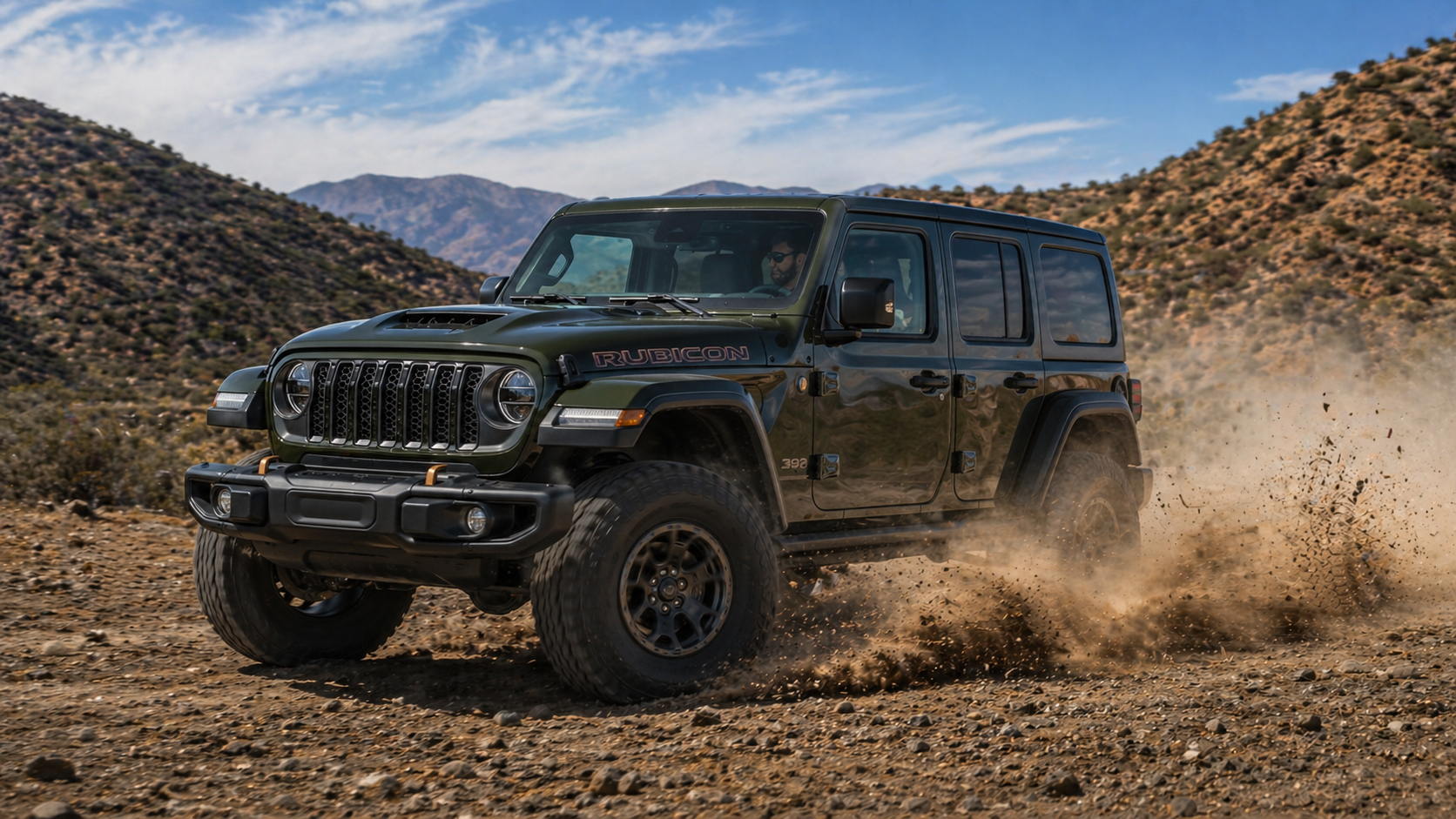
Then there’s the 392—and it doesn’t sneak up on anything. You hear it before you see it. Fire up that 6.4L V8 and the whole vibe changes. This thing isn’t here to be efficient—it’s here to flex. With 470 horsepower and 470 lb-ft of torque on tap, the Rubicon 392 launches like a muscle car in hiking boots, ripping 0–60 in about 4.5 seconds and tearing through the quarter mile in the low 13s. But it’s not just straight-line speed. This Jeep is built to throw down off-road, with serious ground clearance, aggressive approach and departure angles, and locking diffs front and rear. Point it at something ugly, and it just goes. Owning a 392 isn’t subtle—it’s about noise, power, and the kind of grin you can’t wipe off your face.
When you stack the two side by side, the difference is pretty clear. The 4xe is the smart, calculated choice—efficient, surprisingly capable, and a whole new kind of Jeep experience with its electric drive and hybrid tech. It lets you hit the trail without burning through fuel and still holds its own when things get technical. The 392, though? It’s all about excess in the best way possible. It drinks fuel, makes noise, and turns every drive—on-road or off—into an event.
So it really comes down to how you use your Jeep. If you’re daily driving, care about fuel costs, or like the idea of silent trail runs and newer tech, the 4xe makes a ton of sense. But if you live for that V8 rumble, want instant throttle response, and like the idea of having one of the most outrageous Wranglers ever built, the 392 is calling your name.
Either way, you’re not making a wrong choice—you’re just choosing your flavor of fun. Use this comparison as your starting point, dig into the details, and think about how you actually drive. Because at the end of the day, the best Jeep is the one that fits your lifestyle—and gets you out on the trail more often.
Engine and Performance
Pop the hood—or hit the start button—and these two couldn’t feel more different.
The 4xe is all about that instant torque hit. You’ve got a 2.0L turbo four working with electric motors, putting down 375 horsepower and a strong 470 lb-ft of torque. Around town, it’ll roll in electric mode for up to about 21 miles, which is perfect for daily driving or creeping through a campsite without waking everyone up. And with an EPA-rated 49 MPGe, it’s easily the most efficient way to drive a Wrangler. On the road, it feels smoother and quieter than you’d expect from something this trail-capable.
Then you jump into the 392, hit the ignition, and yeah… totally different story. The 6.4L HEMI V8 doesn’t ease into anything—it explodes to life. Same 470 lb-ft of torque as the 4xe, but now backed by 470 horsepower and a soundtrack that makes you want to find the nearest open stretch of road—or dirt. It rips to 60 in about 4.5 seconds, which is honestly wild for a Wrangler. Fuel economy? Let’s just say you’re not buying this thing to save gas—15 city / 19 highway tells you everything you need to know.
Here’s the real-world takeaway: the 4xe is the smarter, more efficient setup and surprisingly refined for daily use. It’s quick, capable, and does things no other Wrangler can do with that electric assist. But the 392 is in a different league when it comes to raw power and attitude. It’s louder, faster, and way more aggressive—on-road and off.
If you want balance and efficiency, the 4xe delivers. If you want a Wrangler that feels like it just chugged a gallon of adrenaline, the 392 is the one.
Off-Road Capabilities
Both of these Wranglers will get you deep into the woods—but the way they handle the trail tells two very different stories.
The 4xe is more than capable off-road, and in typical Jeep fashion, it’ll surprise you with how far it can go. The electric torque actually helps a lot in slow, technical crawling where finesse matters more than noise or speed. That said, it’s not quite as extreme as its big brother. You’ve got slightly less ground clearance and less aggressive approach and departure angles compared to the 392, and the shorter wheelbase changes how it feels when things get off-camber or really uneven. It’ll still tackle tough terrain, but it does it with a bit more strategy than brute force.
Then there’s the 392—and this thing just feels built to punish trails. Higher ground clearance, more aggressive geometry, and that full-time “send it” personality make it one of the most capable factory off-road rigs you can buy. Add in locking front and rear differentials, and it doesn’t just find traction—it demands it. Mud, rocks, steep climbs… the 392 doesn’t hesitate. It just keeps pushing forward like the terrain is optional.
Bottom line: the 4xe is a smart, very capable trail rig that blends tech and control in a way no other Wrangler does. But the 392 is the one you take when you want maximum confidence in ugly terrain and don’t feel like backing down from anything the trail throws at you.
Interior and Comfort
Step inside the 4xe and you’ll notice right away—it’s still a Wrangler at heart. Simple, functional, and built for getting dirty before it gets fancy. The base setup is pretty straightforward: cloth seats, a no-nonsense layout, and an infotainment system that gets the job done without trying to steal the show. It’s comfortable enough for daily driving and road trips, but it leans more “trail ready” than “luxury lounge.”
Now swing into the 392 and the vibe shifts a bit. It still feels like a Wrangler, but it’s dressed up for the occasion. Leather seats, a heated steering wheel, and a more premium audio system give it a noticeably more refined feel. It’s the kind of interior that reminds you this Jeep isn’t just about brute force—it’s also meant to be enjoyed when you’re not hammering down a trail.
In short, the 4xe keeps things practical and purpose-built, while the 392 adds a layer of comfort and refinement without losing its rugged DNA.
Towing and Hauling Capacity
When it comes to pulling weight, neither of these Wranglers turns into a heavy-duty truck—but there is a clear winner depending on what you plan to haul.
The 4xe keeps things on the lighter side. You’re looking at a 2,000-pound towing capacity and around 1,000 pounds of payload. That’s plenty for small trailers, dirt bikes, a couple of kayaks, or gear for a weekend off-grid trip. It’s built more for adventure loads than workhorse duty, and honestly, that fits its whole personality—efficient, capable, but not trying to be a tow rig.
The 392 steps it up a notch. With 3,500 pounds of towing capacity and about 1,350 pounds of payload, it gives you more breathing room for larger trailers, heavier toys, or a more loaded-down overland setup. It’s still not a full-size truck, but it definitely leans harder into the “bring more stuff with you” category.
Bottom line: the 4xe is fine for light-duty adventure hauling, but the 392 gives you more capability when you need to load up and go bigger.
Price
Now we get to the part where the decision gets real.
The Jeep Wrangler 4xe starts at around $47,995, which puts it in a pretty interesting spot for what you’re getting—hybrid tech, solid off-road ability, and daily-driver efficiency all wrapped into a Wrangler badge. It’s the more approachable entry point if you want capability without fully committing to the high fuel bills and higher sticker shock of the V8 life.
The Rubicon 392, on the other hand, starts at about $67,290—and yeah, you feel that jump. But you’re paying for a very different experience: a 6.4L HEMI V8, 470 horsepower, serious factory off-road hardware, and one of the most over-the-top Wranglers Jeep has ever built. It’s not subtle, and it’s not trying to be budget-friendly. It’s built for people who want maximum everything.
When you lay the specs out side by side, the contrast is obvious:
4xe: 2.0L turbo + electric motors | 375 hp | 470 lb-ft | ~49 MPGe | lighter-duty towing | hybrid efficiency focus
392: 6.4L HEMI V8 | 470 hp | 470 lb-ft | 15/19 mpg | higher towing and payload | extreme off-road capability
So here’s the real takeaway: the 4xe is the value play if you want modern tech, efficiency, and still very real Jeep capability. The 392 is the “go big or go home” option—louder, faster, heavier on fuel, and way more focused on delivering an experience than saving you money at the pump.
Two very different price tags… for two very different ways to Jeep.