
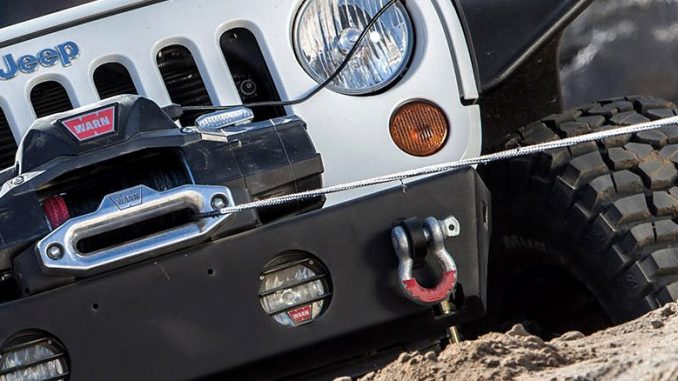
The following page lists many common problems encountered with 12 volt 4×4 and ATV winches that are used in off-road recovery situations. With each condition several possible causes are listed along with possible solutions to get your winch working again. Also be sure to check out the Winch Maintenance article at the bottom of the page.
| CONDITION | POSSIBLE CAUSE | CORRECTION |
| MOTOR RUNS IN ONLY ONE DIRECTION | (1) Defective solenoid or stuck solenoid | (1) Jar solenoid to free contacts. Check by applying 12 volts to coil terminal (it should make an audible click when energized) |
| (2) Defective remote control switch | (2) Disengage winch clutch, remove remote control switch plug from the socket and jump pins at 8 and 4 o’clock. Motor should run. Jump pins at 8 and 10 o’clock. Motor should run. | |
| MOTOR RUNS EXTREMELY HOT | (1) Long period of operation | (1) Cooling-off periods are essential to prevent overheating. |
| MOTOR RUNS, BUT WITH INSUFFICIENT POWER, OR WITH LOW LINE SPEED | (1) Insufficient battery | (1) Check battery terminal voltage under load. If 10 volts or less, replace or parallel another battery to it. |
| (2) Bad connection | (2) Check battery cables for corrosion; clean and grease. | |
| (3) Insufficient charging system | (3) Replace with larger capacity charging system. | |
| MOTOR RUNS, BUT DRUM DOES NOT TURN | (1) Clutch not engaged | (1) If clutch engaged but symptom still exists, it will be necessary to disassemble winch to determine cause and repair. |
| MOTOR WILL NOT OPERATE | (1) Defective solenoid or stuck solenoid | (1) Jar solenoid to free contacts. Check solenoid by applying 12 volts to coil terminal (it should make an audible click when energized). |
| (2) Defective remote control switch | (2) Disengage winch clutch, remove remote control switch plug from the socket and jump pins at 8 and 4 o’clock. Motor should run. Jump pins at 8 and 10 o’clock. Motor should run. | |
| (3) Defective motor | (3) If solenoids operate, check for voltage at armature post; replace motor. | |
| (4) Loose connections | (4) Tighten connections on bottom side of hood and on motor. | |
| MOTOR WATER DAMAGED | (1) Submerged in water or water from high pressure car wash | (1) Allow to drain and dry thoroughly, then run motor without load in short bursts to dry windings. |
| CABLE DRUM WILL NOT FREESPOOL OR IS DIFFICULT TO FREESPOOL | (1) Clutch not disengaged | (1) Check clutch operation according to nameplate. Make sure clutch shifter knob is fully at “OUT” position. |
| (2) Winch not mounted squarely causing end bearing to bind drum (model dependant) | (2) Check mounting to see that installation instructions have been followed. | |
| Ring gear retainer capscrews are too tight. (model dependant) | (3) Remove the gear housing cover, 413018, and all gears from inside the gear housing. Disengage the clutch and check to see that the ring gear will rotate by hand. If it will not, using a hex (allen) wrench, slightly loosen all the capscrews and then snugly re-tighten them in criss-cross pattern, but do not over-tighten. The ring gear must rotate by hand. Re-assemble winch. |
Solenoid Troubleshooting
You can test a winch solenoid by doing bypass test to determine if the problem lies in the switch or solenoid. Use a lead of 12 gauge wire and jump from the battery +12V and contact the green wire on the solenoid. The winch should operate in one direction. Then apply the +12V wire to the black wire on the solenoid. If the winch does not work in the other direction then the solenoid has a problem.
The direction of the winch movement, whether in or out, depends on which of the two two solenoid contacts is connected to the 12V power source with your lead wire. If the winch moves in only one direction, inspect the connections on that solenoid and ensure they are clear of corrosion and make good contact.
To test the motor, apply the +12V power wire to each of the two terminals on the motor. The motor should operate in both directions. If it does operate in both directions then you know the motor is ok and the problem probably lies in the switch or solenoid.
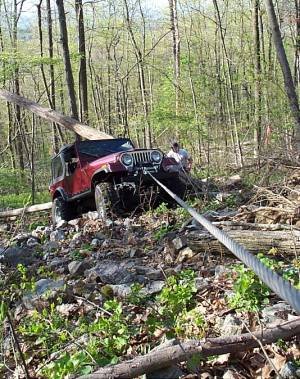
Winch Maintenance
Inspect the wire rope before and after each winching operation. If the wire rope has become kinked or frayed, the wire rope needs to be replaced. Be sure to also inspect the winch hook and hook pin for signs of wear or damage. Replace if necessary.
Keep winch, wire rope, and switch control free from contaminants. Use a clean rag or towel to remove any dirt and debris. If necessary, unwind winch completely (leaving a minimum of 5 wraps on spooling drum), wipe clean, and rewind properly before storage. Using a light oil on the wire rope and winch hook can keep rust and corrosion from forming.
Operating your winch for a long period of time places an extra burden on your vehicle’s battery. Be sure to check and maintain your battery and battery cables according to manufacturer guidelines. Also inspect switch control and all electrical connections to be certain they are clean and tight fitting.
Inspect the remote control for damage, if so equipped. Be sure to cap the remote socket to prevent dirt and debris from entering the connections. Store remote control in a protected, clean, dry area.
Many winches require no lubrication for the life of the winch. However check with your manufacturer’s instructional manual for specific maintenance and lubrication requirements.

Thank you for your advice to keep all of the parts in a winch clean and free of contaminants and to inspect the integrity of the chain after every use. I am thinking of purchasing a custom winch to put on my truck so that I never have to worry about getting stuck. I will have to make sure I look for maintenance services for it too. I wouldn’t want the gears to be broken when I need it!
My winch is on a wheeler. The winch will only operate when the wheeler is not running. As soon as you start the wheeler the winch wont work at all. If I turn on the wheeler and just put the key in the on position then the winch will work fine. It was working fine over the summer. Then when I put my plow blade on it, now I have the problem.
Hi Gary
I have the same issue …did you ever figure out the cause
very helpful article. Helped me a lot. But I have a question to you. How to test winch solenoid? Do you have any article about this topic?
Hi Mack. Did you see the Winch Solenoid Troubleshooting paragraph above?
-Alan Cray
my winch cable arcs to the trailer its mounted on in use when it brushes the metal side of the trailer. How do i correct this?
You might have the winch wired backwards or the solenoid is wired backwards (positive reversed with negative). More likely the 12v line into the winch is revered. It sounds like the winch housing is hot and whenever cable touch the trailer, it’s grounding out. You can verify this by using a volt meter and measure the voltage on the line-in (red) side of the winch to the truck’s frame. Your red line-in should read approx 12 volts (up to 13.8 volt) when grounded to the truck frame. If you get a zero reading, on the red but a 12 volt reading on the black of the winch line-in line to truck frame, you’re backwards. We had this issue with a Jeep years ago that was wired backwards. Every time it hit a bump the winch touched the grill of the Jeep and shut the Jeep off, engine stalled. It wasn’t until I saw a spark fly from the grill did we check out the wiring and see it was wired backwards. How the winch didn’t short out dead to the frame I have no idea. But yes, check that before you kill your battery or worse, fry something or start a fire. Good Luck and thanks for the comments!